Construction
Crossover Waist Yoga Leggings
A V-shaped wrap waistband that sits lower at the front and higher at the sides.
How it is built
Two waistband panels that cross, and the height of the V that decides the look
A crossover waistband is two panels meeting in a V at the front, sitting lower at the centre and higher at the sides. The cross point's height is the spec: raise it and the style reads as a high-waisted legging with a notch; lower it and it becomes a distinctly low-fronted piece.
The wrap is normally two separate pattern pieces rather than a fold, because the two panels cross and each has to sit flat against the body where they overlap. That overlap is also where the band's tension differs from a straight band, so the fabric's recovery is judged on the wrap rather than on the leg.
Cross point height
Where the V bottoms out, measured from the waistband's side height. The whole look follows from this one figure.
Side height
How high the panels rise at the hips. Sets whether the style reads as high-waisted or as a wrap.
Two pieces or one
A true cross needs two panels. A single folded band can imitate the look but will not sit flat at the overlap.
Inner edge finish
The inside of the V is visible when the garment is worn, so it is finished rather than left raw.
What to specify
What a crossover order has to settle
Fabric and colour run through every style we make, so they are covered on the fabric page. These four are the ones this cut adds.
The cross point height
The defining spec. It is set in centimetres and checked on a body, because the V moves as the fabric stretches.
How high the sides go
Decides whether the style sits with a high-waisted range or as its own silhouette.
Band depth
A crossover band is usually shallower than a straight high-waisted band, and the two depths are specified separately.
Whether the wrap is lined
A lined wrap sits flatter and costs more fabric; an unlined one is lighter and depends more on the cloth.
What to send
Crossover brief, in three items
Send these and the reply carries a price. Leave one open and it usually comes back as a question, because the answer decides which fabric and which construction gets quoted. Two routes reach a crossover order: pick a style from the range and change the fabric, colour, print or trims, which is OEM and ODM; or come with your own label, colours and packaging, which is private label.
Leggings on file
A sample of the range
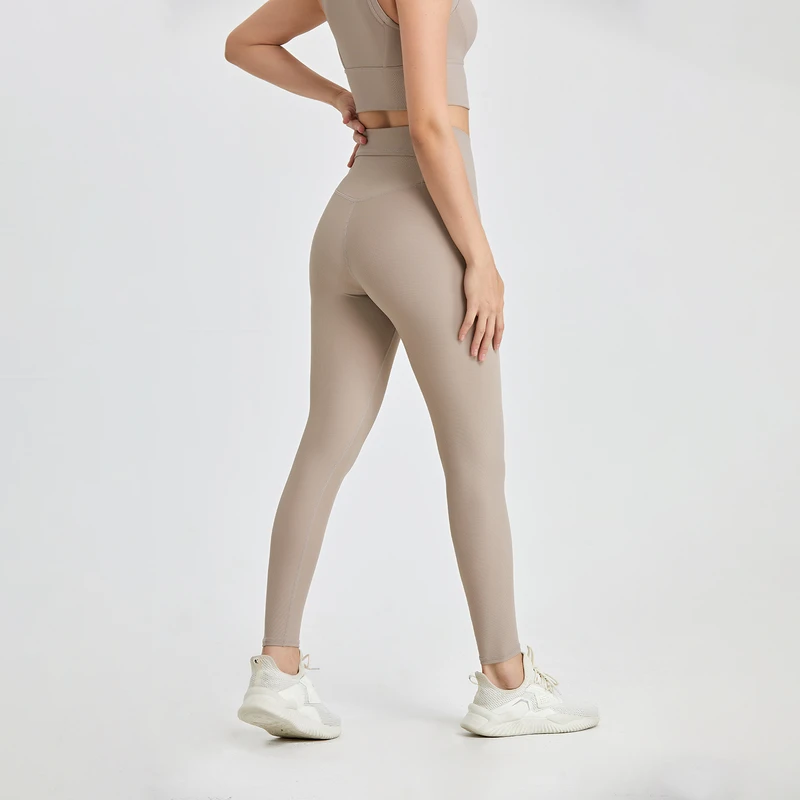
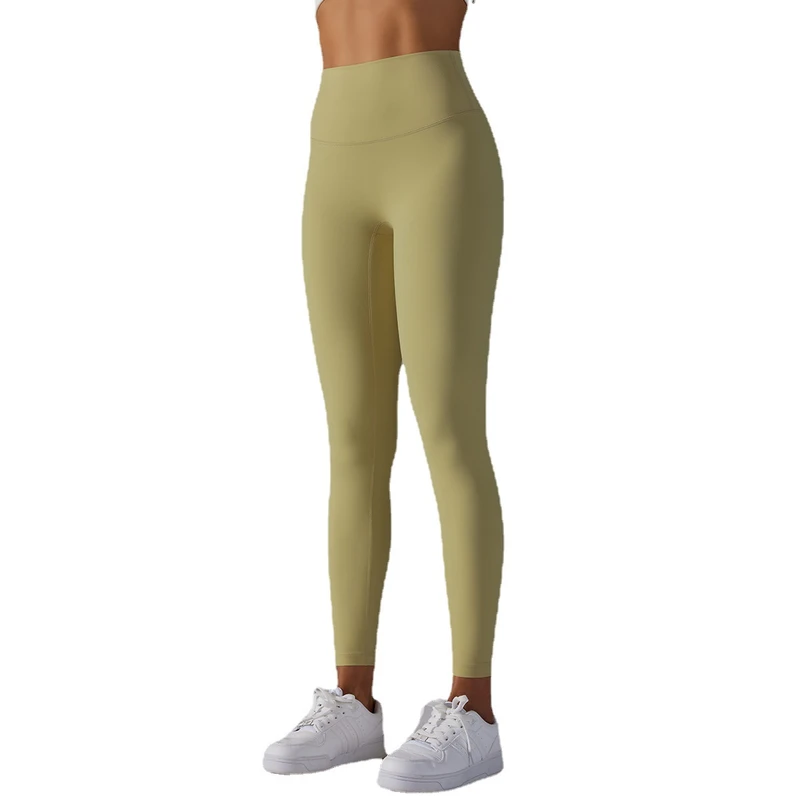
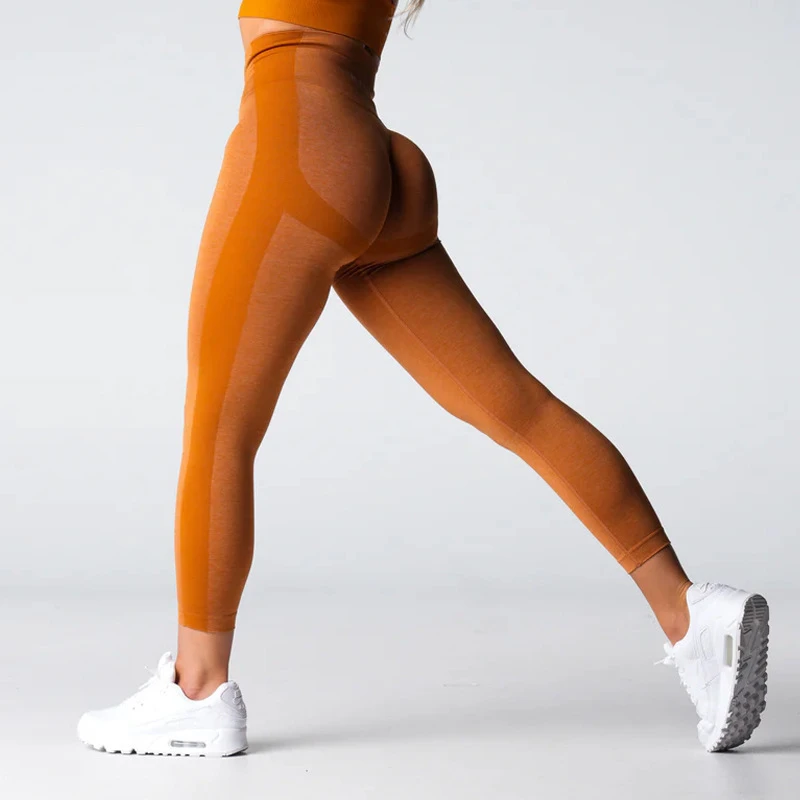
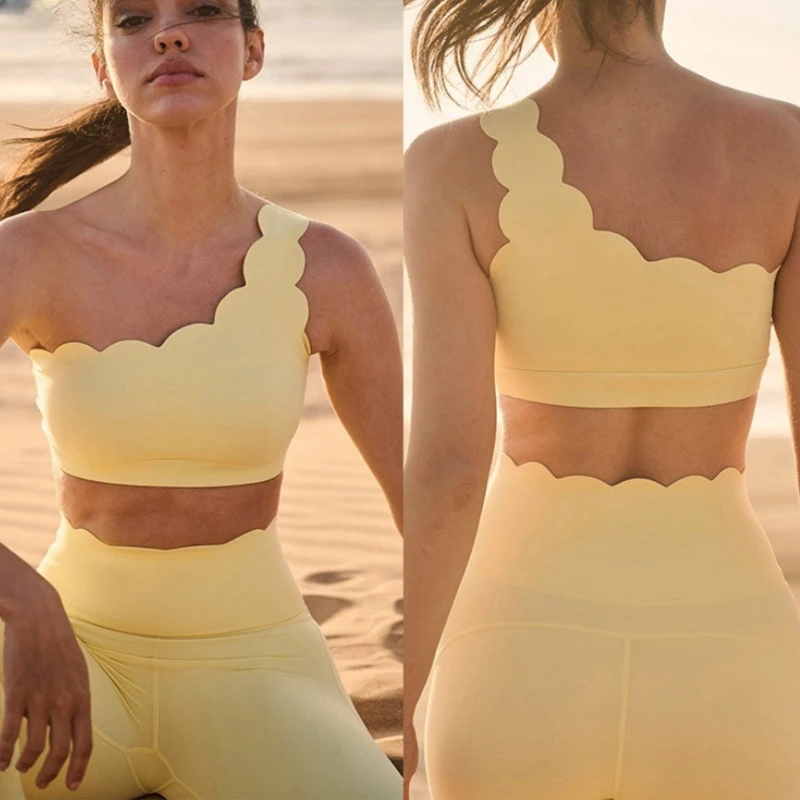
The constructions above are made to order rather than held in stock. These are legging styles currently on file, to show the fabrics and colour directions in use.
Questions buyers ask about this cut
Crossover leggings, answered
Does a crossover waistband stay up?
The sides are the anchor rather than the centre, so a crossover holds differently from a straight band. Whether it stays put depends on the side height and the fabric's recovery — both of which are specified, which is why this cut does not work well as an afterthought on an existing band.
Does the V gape when moving?
It can if the panels are cut from a cloth with weak recovery, because the overlap relies on the fabric returning to its shape. A firmer knit keeps the V closed; a soft one may open at the centre.
Can it be combined with tummy control?
Yes, and the two occupy different pattern areas. Agreeing both at the brief stage avoids a second sample round, since the front panel sits below the band.
Fabrics
What the fabric is specified in
Four parameters decide whether a legging feels right and stays opaque. They are agreed before sampling so the first sample is judged against a number rather than an impression.
Other constructions