Construction
Ribbed Yoga Leggings
A vertical rib that adds texture and a little extra stretch recovery in the fabric.
How it is built
A rib knit stretches differently, which is the whole point and the whole risk
Rib is a knit structure rather than a surface treatment: alternating columns of knit and purl stitches, so the fabric is thicker in the hand, textured on the face, and considerably more elastic across the width than a flat knit of the same yarn. On a legging the rib usually runs vertically, which is the direction that gives the cloth its stretch around the body.
The risk is recovery. Rib stretches further than flat knit, so a rib fabric that is not specified for recovery will grow with wear — and a legging that grows sags at the knee and at the seat. That is why a ribbed style is specified by rib width and recovery together, not by weight.
Rib width
2x2 and 4x2 are the common structures. Wider ribs read as more texture and feel heavier; narrow ribs sit closer to a flat knit.
Stretch direction
The rib runs one way on the roll. Whether it ends up vertical or as a body panel changes both the fit and the look.
Recovery, not just stretch
How far a fabric returns after being stretched. This is the figure that decides whether the legging keeps its shape.
Thickness
Rib builds bulk, so a ribbed legging is generally a warmer garment than the same weight in flat knit.
What to specify
What a ribbed order has to settle
Fabric and colour run through every style we make, so they are covered on the fabric page. These four are the ones this cut adds.
Rib width and structure
Visible in the finished garment and fixed once the fabric is knitted, so it is agreed early.
Recovery specification
The figure that prevents the style from growing. It is quoted by the mill and checked before sampling.
Vertical rib or rib panels
A full ribbed leg and a flat leg with rib side panels are different garments and different costs.
Whether it takes a print
Rib's texture competes with artwork, so a print on rib needs a simpler design to read.
What to send
Ribbed brief, in three items
Send these and the reply carries a price. Leave one open and it usually comes back as a question, because the answer decides which fabric and which construction gets quoted. Two routes reach a ribbed order: pick a style from the range and change the fabric, colour, print or trims, which is OEM and ODM; or come with your own label, colours and packaging, which is private label.
Leggings on file
A sample of the range
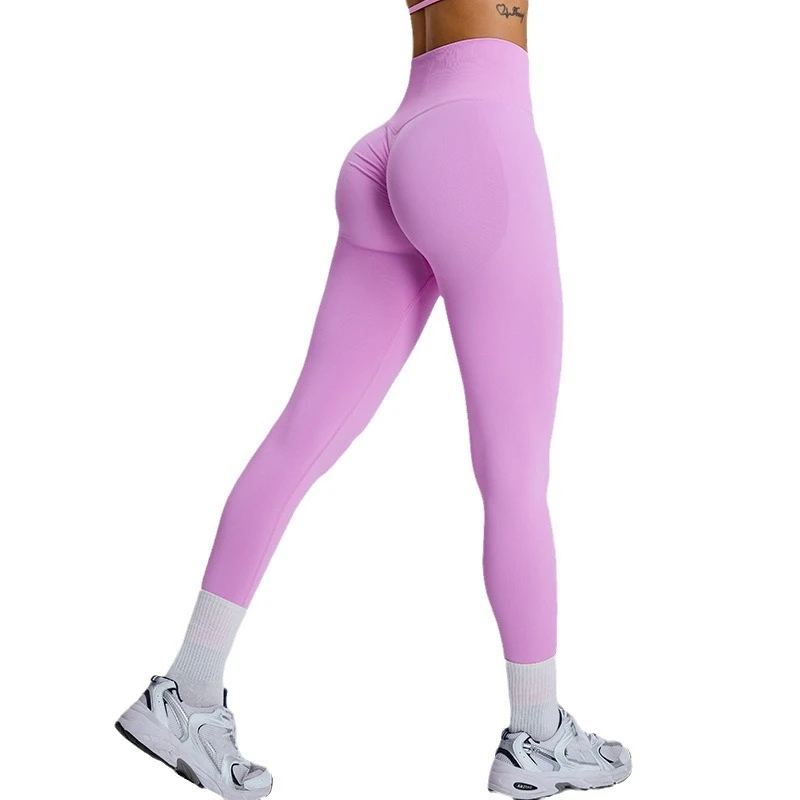
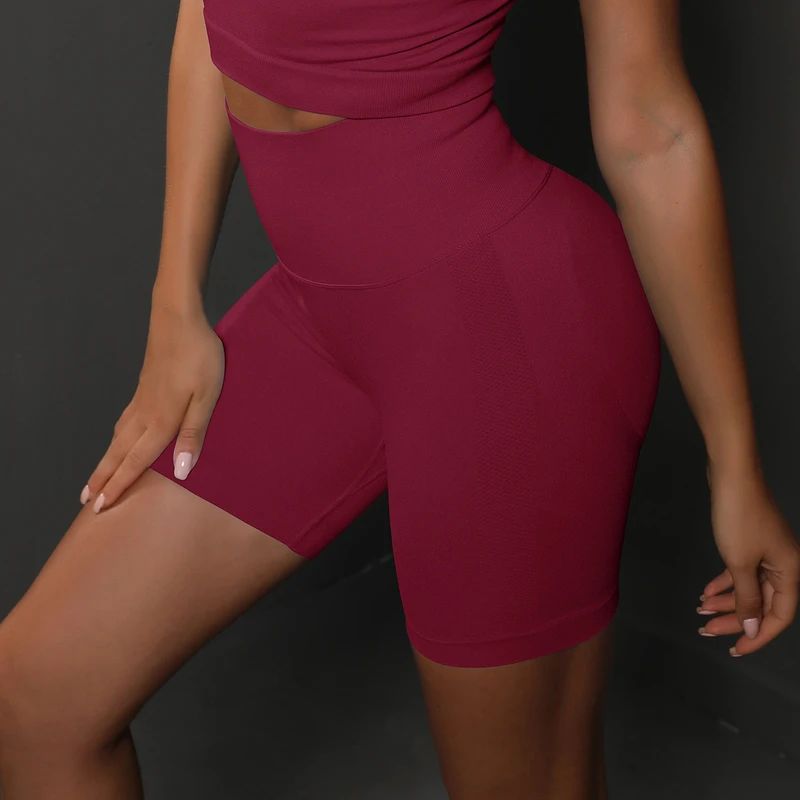
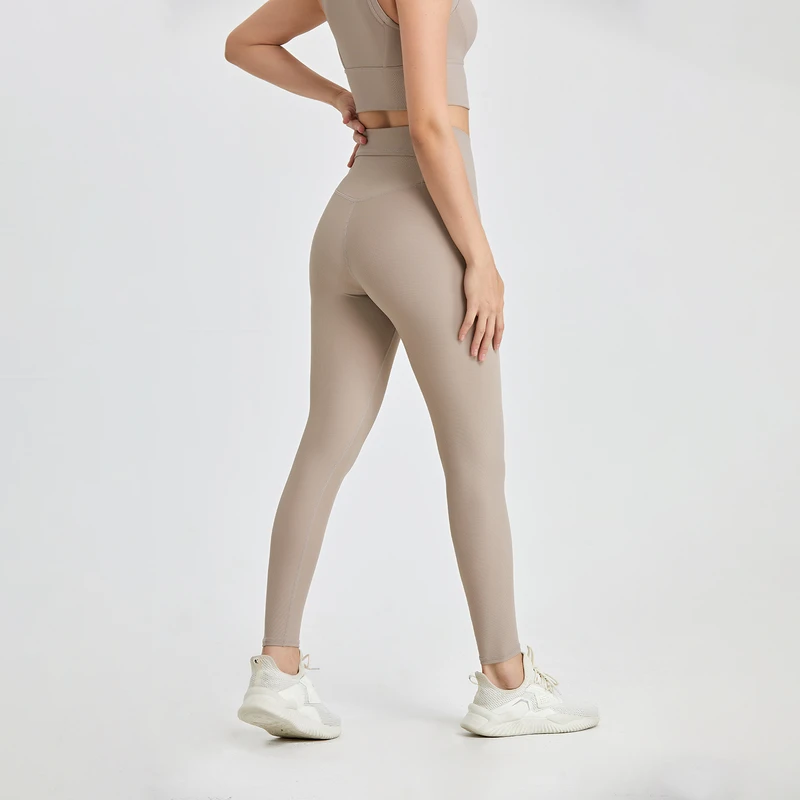
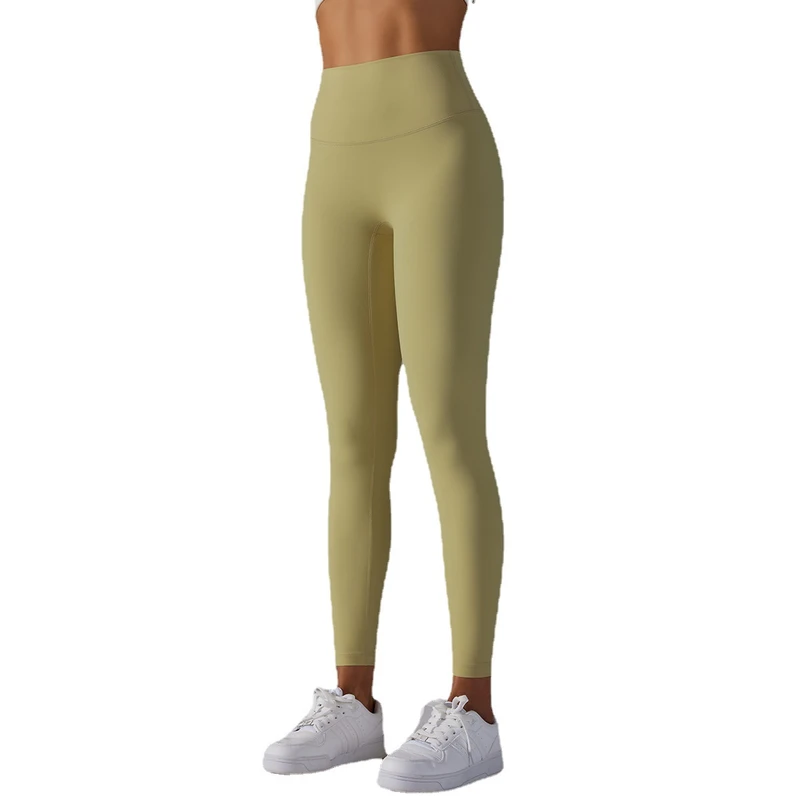
The constructions above are made to order rather than held in stock. These are legging styles currently on file, to show the fabrics and colour directions in use.
Questions buyers ask about this cut
Ribbed leggings, answered
Does ribbed fabric lose its shape?
It can, and recovery is the specification that prevents it. Rib is more elastic than flat knit, so a rib chosen only for its look will stretch with wear. Specifying recovery alongside rib width is what keeps the knee and the seat from going baggy.
Why does a ribbed legging feel heavier?
Because the structure itself builds thickness. The alternating stitch columns trap more air than a flat knit of the same yarn, so a ribbed legging is warmer at the same weight — which is a reason to choose it for a winter range and a reason to avoid it for a hot-climate one.
Can a ribbed legging take a print?
It can, but the rib texture competes with fine artwork and softens it. Bold, simple shapes read well on rib; a detailed all-over print is better on a flat knit.
Fabrics
What the fabric is specified in
Four parameters decide whether a legging feels right and stays opaque. They are agreed before sampling so the first sample is judged against a number rather than an impression.
Other constructions